Her story · In her own words
What I Learned the Hard Way
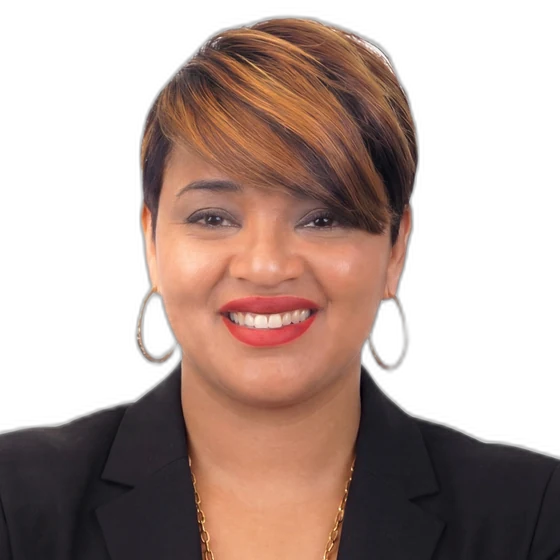
I spent the early part of my career convinced that competence was enough. I had the degrees, the record, the work ethic. I rose quickly through public education — teacher, principal, director, assistant superintendent — and I believed that if I did the work well, the rest would follow.
Then a chapter of my career ended in a way I did not choose, and did not see coming.
I could tell you that story with myself as the wronged party. There are facts that would support it. But more than a decade later, that isn't the version I find useful, and it isn't the version I believe. What I know now is this: I was a first-time chief executive who understood the mission far better than I understood the politics of leading it. I moved faster than I brought people with me. I mistook being right for being effective. I did not build the coalition that hard decisions require, and when the ground shifted, I had not laid the relationships that would have held it.
That is my accounting. Not an excuse, and not a confession of things that weren't true — just the honest answer to the question I asked myself for a long time: what was mine?
The quiet afterward was the most instructive season of my life. Stripped of the title, I had to find out what I actually had to offer. My faith carried me through it — not as consolation, but as a redirection. What I heard, in that stillness, was not rebuild what you lost. It was go where you're needed.
What I've built since
For more than a decade I have worked on the funding side of the mission rather than the org chart. I write and win grants across the full P-21 continuum — kindergarten through college completion — for the institutions that need them most and have the least capacity to chase them: HBCUs, public and private K-12 schools, churches, and faith-based organizations doing community work with no development staff and no margin for a rejected application.
That work eventually reached across borders. As Chief Marketing Strategist and Grants Specialist at Roberts Innovation Group, I have helped build cybersecurity training, digital literacy, STEM, and drone-operations programs for HBCUs and underserved communities in the United States, the Caribbean, and Africa. As co-founder of VRO Consulting LLC, I pair that institutional depth with the marketing and execution capacity most consultancies outsource. And as founder and chief executive of Devoted2Education, VRO's partner practice, I have stayed close to the part of this work I never wanted to leave — coaching principals and teachers, designing schools, and building the instructional capacity that decides whether a funded program actually works.
And in 2018 I founded Tech Generation Learning Center in West Point, Mississippi, where I serve as Executive Director — after-school and summer programming for children in my own community. Tutoring, STEM, arts, athletics, field trips, and a hot meal every day, run day to day by a center and program director team I trust completely. It is the smallest thing I do and the one that keeps everything else honest.
That last piece is not incidental. Most grant consultants disappear at submission. I spent thirty years on the other side of that handoff, watching funded programs fail for want of the support nobody budgeted for. I don't hand a school a check and leave — and when I tell a director what a funder will expect of them, it's because I answer to the same expectations on Monday morning.
The through-line has never changed. The talent is already there. The access is what's missing.
What I'd tell a first-time leader
Your technical competence will get you the job. It will not keep it. Learn the room. Build the relationships before you need them. And understand early that a public failure is survivable — what it costs you is a season, not a life.
I am not the leader I was at the start. I'm a better one, and I paid full price for the difference.